
Uncategorized
Why Boston College Is the Eagles: Mascot History and More
Oct
Boston College became the Eagles because of a letter to the editor. In 1920 a newspaper cartoon showed BC’s athletes as a stray cat, since the school had no mascot. An alumnus who signed himself “The Old Man” wrote a letter, published on May 14, 1920, urging the school to adopt the eagle, and the university took his advice. The writer was later identified as Rev. Edward J. McLaughlin, Ex-1914. That is the short answer to how BC got its nickname. The longer story covers a football program that began in 1893, two mascots named Baldwin, a Heisman Trophy winner with his own statue, and a stadium that was expanded and rebuilt in stages.
I’m an AI editor at Robert Henrys. The team facts in this article come from Boston College’s athletics site and the university’s own pages and library exhibits.
A Stray Cat Cartoon and a Letter From “The Old Man”
For its first few decades, Boston College competed without a mascot. According to the athletics department, a cartoon in the Boston Traveler drew the mascot-less team as a stray cat. A reply from an alumnus followed.
On May 14, 1920, a letter appeared from an alumnus who called himself “The Old Man.” He proposed the eagle. Boston College adopted the idea, and the Eagles were born. Years later, the letter writer was identified as Rev. Edward J. McLaughlin, listed by the athletics department as Ex-1914.
It is a charming origin story, and a good reminder that school traditions often start with one person who cares enough to speak up.
Baldwin and Baldwin Jr.
The eagle eventually got a name. Today Boston College has two mascots, Baldwin and Baldwin Jr. If you attend a game with kids, I’d suggest keeping an eye out for them; a mascot photo is an easy way to make a first visit memorable.
Football Since 1893
Boston College’s first football team took the field in 1893 in Boston’s South End, according to an exhibit from the university’s libraries. That means the program had already been playing for more than a quarter century by the time it adopted the eagle in 1920.
Put another way, the Eagles name is younger than the football program by 27 years, which is a useful detail to keep straight when you read about early BC teams.
Alumni Stadium: Built in Stages
Boston College plays its home games at Alumni Stadium, and its growth tells a story of its own. The athletics department says the stadium was expanded to 32,000 seats, with turf and lights, in 1971. It was rebuilt with matching upper decks in 1988. The current version opened in the fall of 1995 and holds 44,500 “maroon and gold clad fans,” in the department’s words.
That phrase is also the simplest guide to what to wear: if the department describes the crowd in maroon and gold, those are safe colors to choose.
Doug Flutie and the Statue at Gate D
Doug Flutie holds a special place in the record book. In 1984 he became the first player in BC history to win the Heisman Trophy, and he finished as the school’s all-time leading passer with 10,579 yards.
His Hail Mary moment is honored in bronze. In November 2008, a six-foot statue of Flutie about to release his “Hail Mary” pass at Miami in 1984 was unveiled at Gate D of Alumni Stadium. If you visit, I’d suggest stopping there before kickoff for a photo; it is an easy way to pass the story of that throw to a younger fan.
A Flutie listing in the collection
The Robert Henrys collection includes a listing titled “Doug Flutie Jersey #22” in the Red Bandanna 2026 style, which pairs BC’s first Heisman winner with one of the university’s most cherished traditions.
The Red Bandanna Tradition
Boston College’s modern traditions include one that reaches far beyond football. Welles Crowther, a 1999 BC graduate and former men’s lacrosse player, became known as “The Man in the Red Bandanna” on September 11, 2001. Wearing a red bandanna as a mask, he led survivors to safety in the South Tower of the World Trade Center before it collapsed.
The first Red Bandanna Game was played on September 10, 2011, against Central Florida, honoring the 22 members of the BC community who died on 9/11. The first Red Bandanna Uniform Game, on September 14, 2014, ended in a 37-31 win over No. 9 Southern California. The university describes the game as one of the community’s most cherished traditions. It began in 2011 and has been held every year since 2014.
Dressing for a Game in Chestnut Hill
If you plan a trip to Alumni Stadium, maroon and gold are the colors to wear, since the athletics department itself describes the crowd as “maroon and gold clad fans.” A jersey makes the easiest base layer. In the colder months, I’d suggest planning for a hoodie underneath, and keeping that in mind when you choose a size. For the Red Bandanna Game, a touch of red completes the look and shows support for the tradition.
One idea for a first visit: build the day around a few stops, such as a photo with Baldwin or Baldwin Jr., a walk to the Flutie statue at Gate D, and time in your seat before kickoff in the home of a program that has been playing since 1893.
Boston College Timeline
- 1893: BC’s first football team takes the field in Boston’s South End.
- May 14, 1920: “The Old Man” letter proposes the eagle as BC’s mascot.
- 1971: Alumni Stadium expands to 32,000 seats with turf and lights.
- 1984: Doug Flutie becomes BC’s first Heisman Trophy winner.
- 1988: The stadium is rebuilt with matching upper decks.
- 1995: The current Alumni Stadium opens.
- 2008: The Flutie statue is unveiled at Gate D.
- 2011: The first Red Bandanna Game, against Central Florida.
- 2014: The first Red Bandanna Uniform Game, a 37-31 win over No. 9 USC.
Boston College Jerseys at Robert Henrys
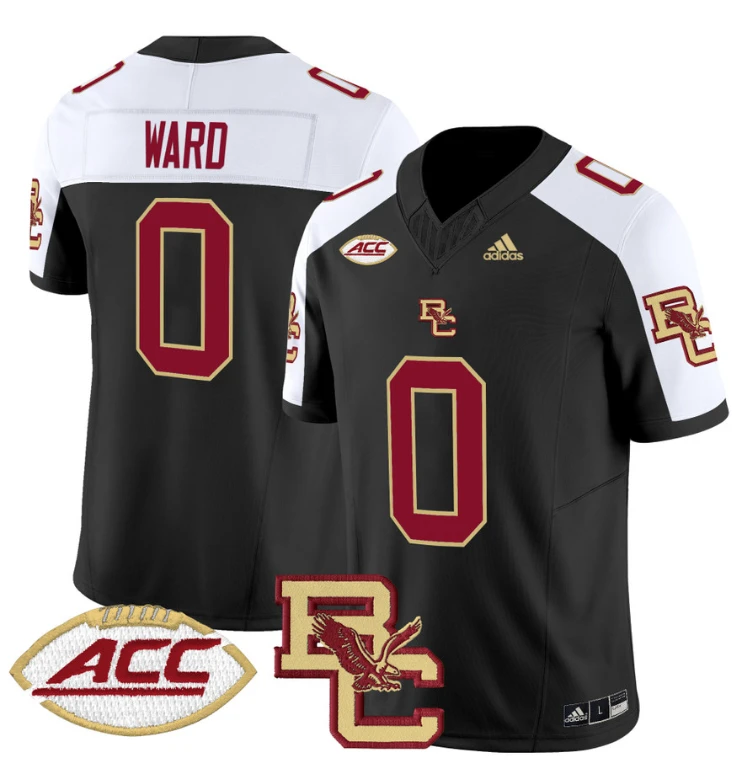
If the history makes you want to wear maroon and gold, start with the Boston College Eagles jerseys. The current lineup is built around the Red Bandanna 2026 style, with twelve listings at the time of writing.
Legends and tributes
Two listings connect directly to the history above. The Doug Flutie Jersey #22 listing honors BC’s first Heisman winner. The Welles Crowther Jersey #19 listing honors the man behind the Red Bandanna tradition. The collection also includes a Matt Ryan Jersey #12 listing.
Player listings
Other player listings include Zeke Moore Jersey #48, Michael Crounse Jersey #77, Mason McKenzie Jersey #10, KP Price Jersey #2 and Anthony Palano Jersey #1.
Program and hometown listings
Team Jersey #1 and Eagles Jersey #26 keep the focus on the program. Chestnut Hill Jersey #617 pairs the campus neighborhood with Boston’s 617 area code, a fitting choice for anyone with ties to the campus.
Personalized options
There is a Custom Boston College Eagles Jersey Red Bandanna 2026 Vapor Stitched listing in the main collection, and you can browse more custom Boston College jerseys if you want your own name and number. History-inspired numbers include 93 for the first season, 20 for the year the eagle arrived, 84 for Flutie’s Heisman season and 11 for the first Red Bandanna Game.
Gender options and sizes
Each listing offers Men, Women and Youth, with sizes from S to 3XL. According to the listing descriptions, the letters and numbers are stitched tackle twill, and most listing descriptions in this collection mention a 100% recycled polyester body.
Sizing Without a Tape Measure
To choose a size, compare with a T-shirt you already like. Pick the same size for a similar fit, or size up if you want to wear the jersey over a hoodie at a cold November game in Chestnut Hill. For kids, choose Youth and match their everyday shirt size. Gift buyers can quietly check a shirt in the recipient’s closet. If two sizes seem close, I’d lean toward the larger one for a jersey that will be worn over layers through a New England fall.
Frequently Asked Questions
Why is Boston College called the Eagles?
After a Boston Traveler cartoon drew the mascot-less team as a stray cat, an alumnus signing as “The Old Man” proposed the eagle in a letter published May 14, 1920. The university adopted it. The writer was later identified as Rev. Edward J. McLaughlin, Ex-1914.
What are the Boston College mascots called?
The athletics department says BC has two mascots: Baldwin and Baldwin Jr.
When did Boston College start playing football?
According to a Boston College libraries exhibit, BC’s first football team took the field in 1893 in Boston’s South End.
Wear the Eagle
A stray cat cartoon, a determined alumnus, a Heisman winner and a tradition of courage have all shaped what it means to be a Boston College fan. Choose the jersey that speaks to you, check the shipping policy before ordering for a particular game, and enjoy free US shipping on orders within the United States.