
Uncategorized
How to Compare Football Jersey Materials and Details
Nov
Football jersey materials come down to four things you can compare on almost any listing: the fabric used for the body, the way letters and numbers are applied, how the seams are built, and what kind of decoration (embroidery or applique) sits on top. Most fan jerseys today use a polyester body, so the bigger differences usually show up in the numbers and the trim. Reading those details closely tells you far more than a product photo alone, and the guide below explains what each term means.
The body fabric
Polyester is the standard choice for football jerseys, and for good reasons. Generally speaking, it is light, it dries faster than cotton, and it keeps its color and shape well through regular washing. A cotton tee feels soft on day one but tends to stretch, fade and hold sweat; a polyester jersey usually behaves more like athletic wear.
Two phrases are worth looking for in a description:
- Recycled polyester: fiber made from reclaimed plastic rather than new raw material. In everyday wear it looks and feels like standard polyester.
- Moisture-wicking: fabric designed to pull sweat away from the skin toward the outside surface, where it can evaporate. That matters most for afternoon kickoffs and packed student sections.
How the letters and numbers are applied
This is where jerseys differ most, and it is the first detail many fans check.
Stitched tackle twill
Tackle twill is a sturdy woven fabric cut into the shape of each number or letter and then sewn onto the jersey. Because the pieces are separate layers of fabric, they have visible texture and edges you can feel with your fingers. Many fans prefer this look because it resembles what players wear on the field.
Printed or heat-pressed graphics
Printed numbers are applied directly to the surface with ink or a heat-transfer film. As a general rule they are lighter and smoother, but they sit flat, and depending on the method they can crack or peel over many wash cycles. A printed jersey can still be a fine choice for casual wear; just know what you are comparing.
Seams and construction
Seams rarely appear in product photos, yet they affect comfort. A flatlock seam joins two edges of fabric so they lie flat against each other instead of folding into a raised ridge. The result is less bulk on the inside of the garment, which generally means less rubbing at the shoulders and sides. Athletic apparel uses flatlock construction for exactly that reason, so it is a useful word to look for.
Embroidery and applique
Logos, patches and decorative elements are usually handled in one of two ways:
- Embroidered fabric applique: a shaped piece of fabric stitched onto the jersey, often with a satin-stitch border. It gives a raised, layered appearance.
- Embroidered graphics: designs sewn directly into the jersey with thread, without a separate fabric piece underneath.
Both add depth compared with a flat print. When a listing names a patch in its title, such as a Florida patch or a CFP Final patch, check the photos to see where it sits and how it is attached.
A quick checklist for comparing listings
- Read the fabric line: polyester, recycled polyester, cotton or a blend.
- Look for the word “stitched” and the phrase “tackle twill” if you want sewn-on numbers.
- Check the seam description for flatlock construction.
- Note whether patches and logos are embroidered, applique or printed.
- Confirm the size range and whether Men, Women and Youth cuts are available.
- Open the size chart on the product page rather than guessing from your T-shirt size.
- Compare the full product title, since numbers and patches can differ between similar designs.
How our Malachi Toney jerseys compare
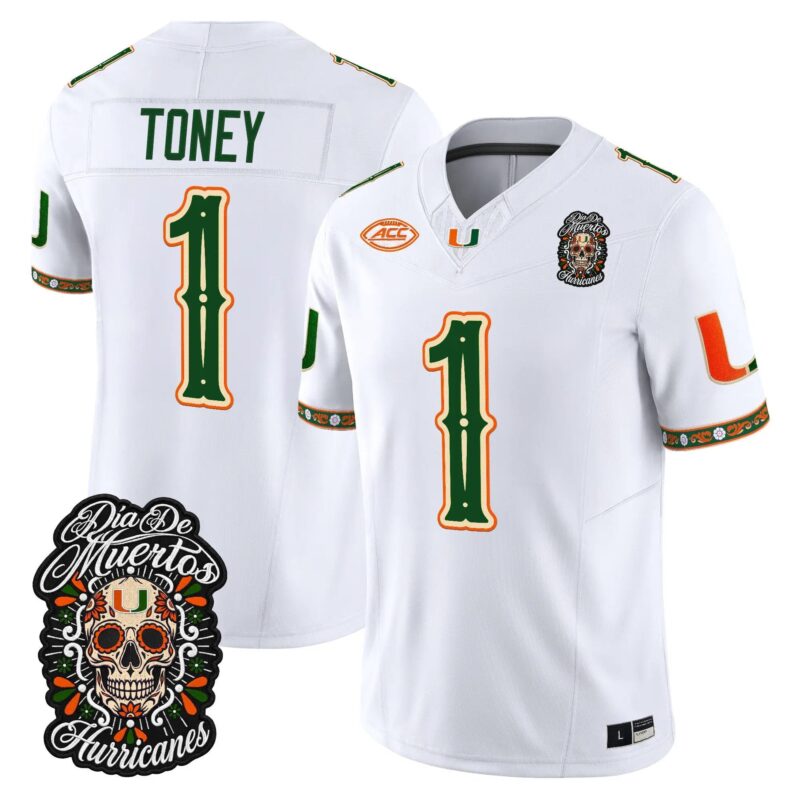
Applying that checklist to our own Malachi Toney Miami jerseys gives a clear picture. The listings describe a 100% recycled polyester body, flatlock seams and moisture-wicking fabric. Letters and numbers are stitched tackle twill, and the designs use embroidered fabric applique and embroidered graphics. Each listing offers Men, Women and Youth options in sizes S through 3XL.
Styles in the collection include the Día de los Muertos Vapor Limited All Stitched (Bone, Green, Orange and White), the 2009 Throwback Vapor Limited All Stitched, the 2001 Throwback 2026 All Stitched, the Throwback Florida Patch Stitched and the 2026 Vapor Limited All Stitched Orange, all carrying the #1 that Toney wears. The CFP Final Patch Stitched listing uses #10 lettering and adds Black plus alternate Green and Orange colorways, which is a good example of why the last checklist item matters.
As a final general tip, turn any stitched jersey inside out, wash it cold and let it air dry. Follow the care label on the garment, and the details you compared before buying will look their best for longer.