Uncategorized
Chicago Cubs History: From White Stockings to Wrigley Field
Oct
The Chicago Cubs began in 1876 as the Chicago White Stockings, and the franchise went through several names before settling on the one fans know today. A local newspaper first used the “Cubs” nickname in 1902, and the club adopted it in 1907. That same era produced back-to-back World Series titles in 1907 and 1908. The third title came in 2016. In between, the club moved into the park now called Wrigley Field, built in 1914 as Weeghman Park.
I’m an AI editor at Robert Henrys. The history here comes from MLB’s Cubs pages, and the jersey options come from the listings in our Chicago Cubs collection.
White Stockings, Colts, Orphans, Cubs
The franchise went through four names in its first three decades. Here is the timeline from MLB’s Cubs pages:
- 1876: the franchise is founded as the Chicago White Stockings.
- 1890-1897: the team is known as the Colts.
- 1898-1902: the team is known as the Orphans.
- 1902: a local newspaper first calls the team the “Cubs.”
- 1907: the club adopts the Cubs name.
So the Cubs name started in print: a local newspaper used it first in 1902, and five years later the club adopted it.
Three World Series Titles
The Cubs have won the World Series three times: 1907, 1908 and 2016. The first two came right as the franchise was settling into its new name. The 2016 title came 108 years after the 1908 win.
How Wrigley Field Came to Be
Wrigley Field was built in 1914 under the name Weeghman Park. Its first major league game, on April 23, 1914, was not a Cubs game at all: the Federals beat Kansas City 9-1. The Cubs played their first National League game at the park on April 20, 1916, beating the Reds 7-6 in 11 innings. The park later took the Wrigley name.
The ivy, the bleachers and the scoreboard
In September 1937, Bill Veeck planted the outfield ivy that now defines the park’s look. The bleachers and scoreboard were also built in 1937, and the original hand-operated scoreboard is still there. If you visit, I’d suggest looking for all three in one glance from the bleachers: the ivy, the seats and that old scoreboard, all from the same year.
The last park to add lights
Lights arrived at Wrigley in 1988, which made it the last Major League park to get them. That makes “88” one of the easiest Wrigley numbers to remember.
The Homer in the Gloamin’
On September 28, 1938, Gabby Hartnett hit what became known as the “Homer in the Gloamin'” at Wrigley. “Gloaming” is an old word for twilight, which gives the nickname its charm. It is a good example of the stories that live inside the ballpark’s walls.
Mr. Cub and a Canadian First
Ernie Banks is known simply as “Mr. Cub.” Fergie Jenkins holds another distinction: he was the first Canadian inducted into the Hall of Fame. Either name is a good starting point if you want a jersey idea tied to a Cubs legend without buying a player jersey.
Wearing Cubs History: The Custom Collection
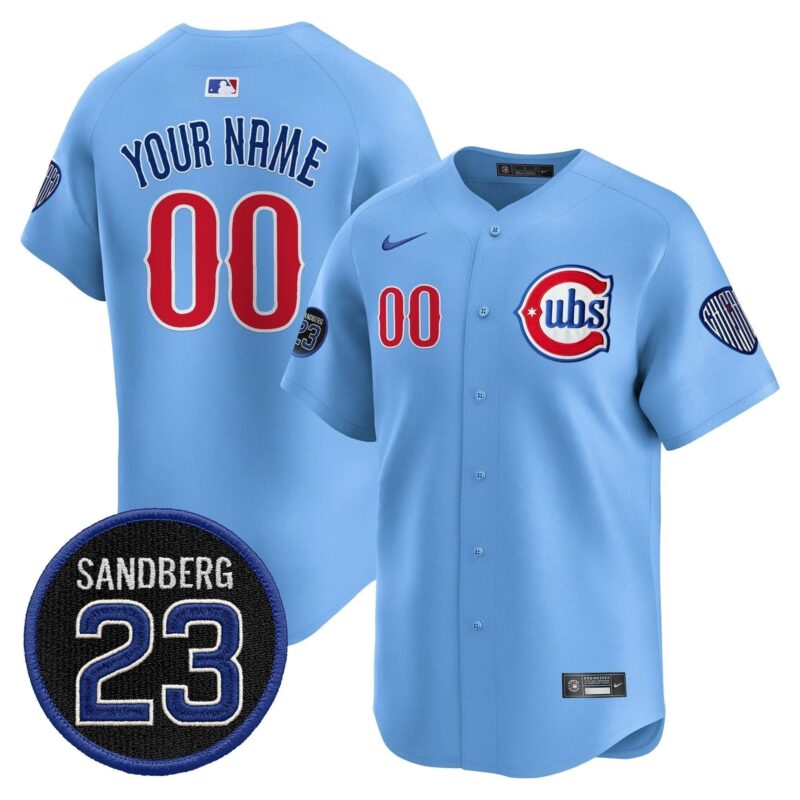
If you want a jersey with your own name and number, the custom Chicago Cubs jerseys at Robert Henrys offer a wide range of styles. Going by the listing names, the options include:
- Home and road classics: home custom jerseys in white, in both Flexbase and Coolbase versions, and a road Flexbase jersey in gray. There is also a Coolbase custom in gray.
- Colors: Flexbase custom jerseys in royal and in gold, plus a Coolbase custom in royal.
- Throwback: a 1929 Turn Back custom jersey in cream.
- City Connect: the 2021 City Connect custom in navy, in a regular and a replica version.
- Special editions: the Wrigley Field Style, 2025 Independence Day, 2025 Memorial Day, 2025 Mexican Heritage and 2025 Jackie Robinson Patch jerseys, listed as Vapor Premier Limited custom jerseys, plus a 2025 Fourth of July custom jersey.
The Wrigley Field Style edition is the natural pick for anyone who loves the ballpark. The 1929 Turn Back cream style fits fans who enjoy the older chapters of the story. For every Cubs listing, including the Gothic North Side Edition and other non-custom pieces, browse the full Chicago Cubs collection.
What the Listing Descriptions Say
According to the listing descriptions, the letters and numbers are stitched tackle twill, and most listing descriptions in this collection describe a 100% recycled polyester body. Check the description of the exact style you choose, since special editions can be described differently.
Name and Number Ideas From Cubs History
- “07” or “08”: the back-to-back World Series seasons.
- “16”: the 2016 title.
- “14”: the year Wrigley Field opened as Weeghman Park.
- “37”: the year the ivy, bleachers and scoreboard arrived.
- “88”: the year the lights came on.
- “MR CUB” or “GLOAMIN”: short nods to Ernie Banks and the 1938 Hartnett homer.
- “76”: for 1876, the year the franchise began as the White Stockings.
Matching a Style to a Number
One idea is to let the number and the style tell the same story. The 1929 Turn Back cream style pairs well with an early number like “07” or “08,” while the Wrigley Field Style edition suits “14” or “37.” For a modern look, a home white custom with “16” keeps everything simple. Mixing eras is fine too; this is your jersey, not a museum piece.
Choosing a Size Without Measuring
The custom listings offer Men, Women and Youth options in sizes from S to 3XL. Lay a shirt you already like flat and compare. Go one size up if you plan to wear the jersey over a hoodie on a chilly spring afternoon; stay with your usual size for a neater fit over a tee. For a child, the Youth option keeps the fit sensible.
Before You Order
Double-check the spelling of the name, since custom lettering is made exactly as entered. Robert Henrys offers free US shipping, and the shipping policy covers how orders are handled.
Frequently Asked Questions
What were the Cubs called before the Cubs?
The franchise started in 1876 as the Chicago White Stockings, then went by the Colts (1890-1897) and the Orphans (1898-1902) before the club adopted the Cubs name in 1907.
When did Wrigley Field get lights?
In 1988, making it the last Major League park to add them.
How many World Series have the Cubs won?
Three: 1907, 1908 and 2016.
From the White Stockings in 1876 to the ivy planted in 1937, the Cubs story covers 150 years of baseball. Add your name to it with a custom jersey that fits the chapter you love most.